
Best Countertop Material for a Bathroom Vanity: How to Choose
Updated: 5 days ago
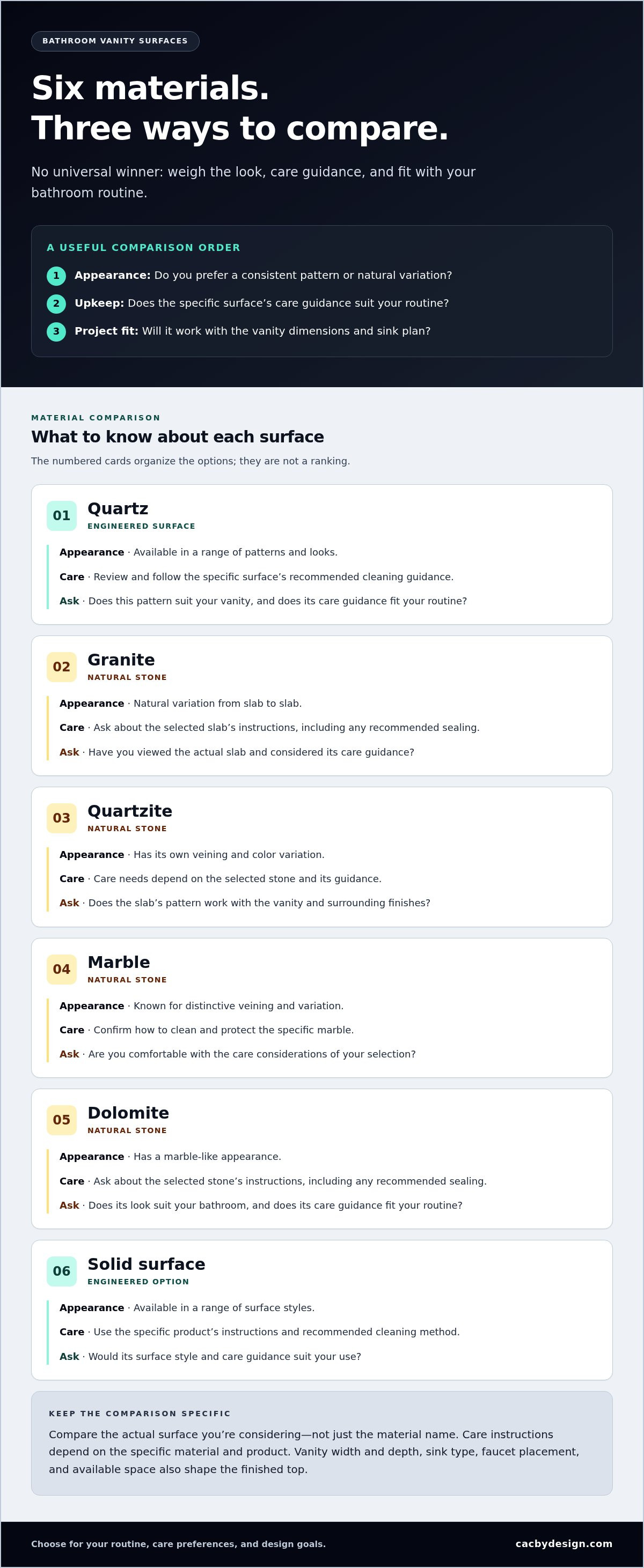
The most striking vanity top isn’t automatically the best fit for your bathroom. The best countertop material for bathroom vanity use depends on more than appearance: your cleaning routine, how you use the sink, and the look you want all matter. A surface that suits everyday life should work with the vanity beneath it and feel at home in the room.
It’s easy to focus on one material, then discover there are other decisions to make. Quartz, granite, quartzite, marble, dolomite, and solid surface each offer different looks. The finished result also depends on details such as the sink cutout and edge shape. Those choices affect how the countertop meets the basin, cabinets, and overall bathroom design.
This guide compares popular vanity countertop materials by appearance and practical considerations, so you can build a shortlist around your priorities. You’ll also learn how to coordinate the surface with your vanity and bathroom, and plan sink and edge details before fabrication. When design, precise measurement, fabrication, and installation are considered together, choosing a top becomes a clear decision rather than a guess.
Table of Contents
What makes a countertop material right for a bathroom vanity?
The best material depends on your routine, care preferences, design goals, and project fit. A bathroom vanity countertop is the working surface fitted over a vanity and shaped around its sink. It needs to support daily tasks while complementing the cabinet, fixtures, and room. There isn’t one universal winner. The best countertop material for bathroom vanity use is the surface that fits your home, habits, and priorities.
Start by considering how the room is used. Water may splash around a frequently used sink, and cosmetics, toothpaste, or cleaning products can come into contact with the surface. Ventilation and how quickly you wipe up spills may also shape your care routine. These factors don’t make one material automatically right or wrong, but they help you identify what to ask about when comparing surfaces.
Countertops include natural stone and other materials, each with its own appearance and care guidance. This Countertop materials overview provides general background on countertop categories. For a vanity, focus on how the specific surface looks in your room and what its care instructions mean for your routine.
How bathroom routines shape countertop priorities
A primary bathroom may see repeated sink use throughout the day and frequent cleanup. A guest powder room often gets occasional use, so appearance may take greater priority than a demanding daily routine. Neither room dictates a particular material. Consider what is likely to land on the surface, how promptly you clean it, and whether you’re comfortable following the care guidance for your selection.
Cleaning habits count. If you prefer straightforward upkeep, include that preference in your shortlist rather than choosing by color alone. If the room stays damp after showers, think about how that affects your regular cleaning and drying routine. Don’t assume that every countertop responds the same way. Care instructions depend on the specific material and product.
What to decide before comparing vanity top materials
Rank your priorities before looking at samples: appearance, upkeep, and everyday practicality. Decide whether you want a consistent pattern or natural variation, how much routine care feels manageable, and what the surface will face in your bathroom. A clear ranking helps turn a broad selection into a useful shortlist.
Then account for the project itself. Vanity width and depth, sink type, faucet placement, and available space all shape the finished top. A material that appeals visually still needs to work with the sink and cabinet dimensions. Keep those measurements in view as you compare options, then refine the details during planning.
The best vanity countertop is a fit, not a universal ranking. Choose based on your bathroom’s routine, the care you’re willing to provide, the look you want, and the dimensions the design must accommodate. That framework makes the next comparison more focused and helps prevent a beautiful surface from becoming a poor match for daily life.
Compare quartz, granite, quartzite, marble, dolomite, and solid surface
These six materials offer different visual possibilities and care considerations. Compare the actual surface you’re considering, not just a general material label. The best countertop material for bathroom vanity use is the one whose appearance, care guidance, and project details match your priorities.
How engineered quartz differs from natural stone
Quartz is an engineered countertop material, while granite, quartzite, marble, and dolomite are natural stones. Their patterns and care instructions differ, so compare the specific options rather than assuming one set of rules applies to all. Before choosing, review the product guidance for cleaning, sealing, and protecting the surface. CAC offers quartz and natural stone countertops, and its team can help you compare the available materials as part of the design process.
Where each option fits
Granite, quartzite, marble, and dolomite each bring natural variation, so inspect the actual slab rather than relying on a small sample or a general color label. Quartz and solid surface offer engineered alternatives with their own patterns and care guidance. Compare the surface in the context of your vanity, sink, lighting, and bathroom finishes.
The trade-offs depend on the selected slab or surface and its care guidance. For a more confident comparison, view countertop materials in person at CAC’s Mason fabrication facility and showroom. Seeing the actual slab can help you judge how its pattern and color will work with your design.
If you’re planning a vanity top, countertop design and installation brings material selection and project fit into one plan.
Which bathroom vanity countertop fits your priorities?
Use your routine and design goals to reduce the options, not to crown one material as the winner. A useful shortlist weighs three things: how much care you’re comfortable with, how much visual variation you want, and how the bathroom is used. Treat each material as a candidate with trade-offs, then compare its specific care guidance and appearance before deciding.
Choose by maintenance expectations and daily use
Think about your actual routine. A frequently used primary bathroom may call for a surface whose care instructions feel manageable amid regular sink use and cleanup. A powder room may give you more room to prioritize appearance if it sees less activity. Neither use case guarantees a particular material will perform best. The exact surface and its care directions matter.
If you want a simpler care routine: Compare quartz and solid surface, then review the instructions for the specific product. Don’t assume that one general description covers every surface or that a material needs no routine care.
If natural variation matters most: Look at stone options and compare actual slabs. Understand any care or sealing guidance for the selected material before making it part of a daily-use bathroom.
If the room gets frequent use: Prioritize the material’s documented care needs and how those fit your habits. Frequent splashes and regular cleaning make the care plan as relevant as the color or pattern.
For every option, follow the guidance for the exact material and selected slab. Care can differ across products, and instructions for one stone shouldn’t be applied automatically to another.
Choose by visual character and bathroom design
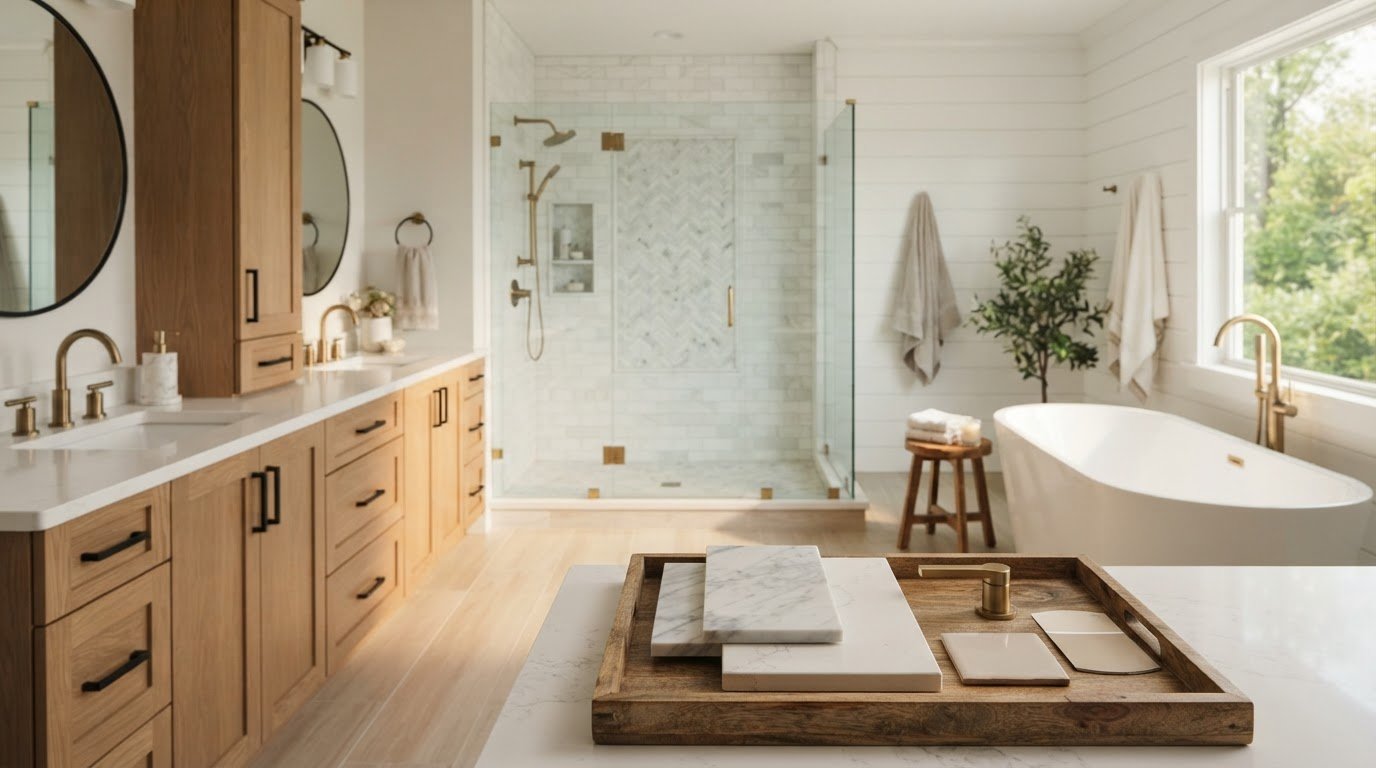
Engineered surfaces and natural stone can offer different patterns and degrees of variation, but the actual look depends on the option you select. View a full slab where possible, then compare it beside the vanity finish, wall color, flooring, and fixtures. A small sample may not show the complete pattern or how it will read across the finished top.
Use this quick pros-and-cons check as you narrow the shortlist:
Quartz or solid surface: A potential fit if you prefer an engineered look. Compare the available patterns and the care guidance for the specific surface.
Granite, quartzite, marble, or dolomite: Potential fits if you’re drawn to natural variation. Care needs vary by material and selection, so factor the specific guidance into your decision.
Keep the decision practical. Rank care tolerance, visual character, and bathroom use from highest to lowest priority. Set aside options whose documented care requirements don’t suit your routine, then compare the remaining surfaces beside your vanity finishes. That process helps identify the best countertop material for bathroom vanity plans without relying on unsupported rankings or promises.
Because the top is part of a larger room, coordinate the surface with the vanity and fixtures as you refine the design. The Cincinnati bathroom remodeling guide offers a broader view of how bathroom decisions work together.
Plan sink fit, countertop edges, and vanity measurements
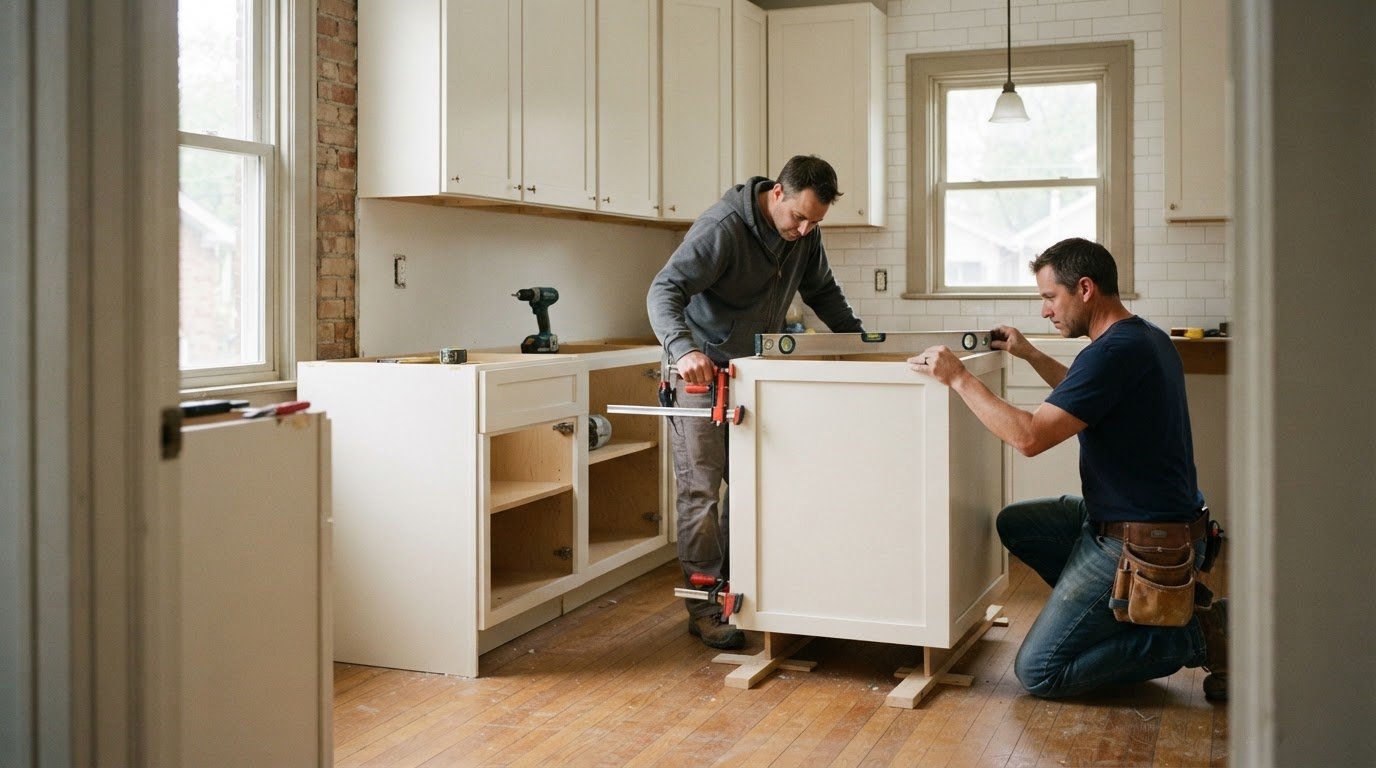
A countertop plan works best when dimensions, sink placement, material, and finishing details are coordinated before fabrication. A basin choice affects the cutout, while the vanity’s actual size sets the working footprint for the top. Treat these decisions as a sequence, not separate selections. Accurate templating connects material choice to a properly planned fit.
Before planning, gather the vanity’s measurements, the sink you’re considering, and any details that affect placement, such as faucet location or nearby walls. CAC provides precise measurements and templating, then creates custom sink cutouts and special shapes as part of the countertop process. Project-specific measurements matter because no single dimension fits every vanity and sink combination.
Coordinate the vanity dimensions, sink, and custom cutout
Follow this sequence to keep design choices aligned and avoid finalizing details too early:
Measure the vanity. Record its width and depth, and note how it meets walls or adjacent cabinets. These details establish the top’s planned footprint.
Choose the sink. Decide on the basin before the cutout is finalized. Its shape and position affect the opening and how the top functions around it.
Select the material. Compare your shortlisted surfaces with the vanity, sink, and bathroom finishes. The material choice informs the fabrication plan.
Finalize the edge and cutout details. Set the edge profile and sink placement before the top is fabricated. The design and measurements work together to define the finished piece.
Keep your sink and faucet selections available during planning. A sink centered on the vanity, for example, requires a different layout from one positioned to leave more counter space on one side. The right arrangement depends on the room, the cabinet, and how you use the surface. CAC’s measurement and templating process translates those project details into a fabrication plan.
Select a countertop edge that suits the design
Choose an edge with the vanity’s character and the countertop’s appearance in mind. CAC’s available profiles are Square edge, Beveled edge, Bullnose edge, Ogee edge, Waterfall edge, and Knife edge. Consider whether you want the edge to read as a crisp detail or a more shaped finish, then view it alongside the material and cabinet style. The edge is a small detail with a visible role in the finished design.
Countertop selection, measurement, templating, and fabrication are linked steps. The Cincinnati countertop design and installation process explains how those decisions come together. For a vanity top planned around your sink and measurements, countertop design and installation brings the details into one process.
Get a bathroom vanity countertop designed and installed in Greater Cincinnati
Choosing a material is one part of the project. The finished vanity top also depends on accurate measurements, sink placement, fabrication, and installation. Countertops and Cabinetry By Design brings those steps together, helping homeowners plan a bathroom vanity countertop from material selection through installation. CAC’s designers, fabricators, and installers are in-house employees, so the work is handled by the company’s own team.
For homeowners comparing the best countertop material for bathroom vanity use, seeing actual surfaces can make the decision clearer. CAC’s Mason fabrication facility and showroom lets customers view in-stock slabs, while the West Chester showroom provides a kitchen and bath setting for design planning. The goal is a top that fits the room and the way it’s used, with care guided by the Mom’s house standard.
See materials and plan the vanity top with CAC
The process connects design decisions to a made-to-fit countertop. CAC provides precise measurements and templating, then fabricates the top with computer-controlled cutting and quality-control inspection. Custom sink cutouts and the selected edge profile are coordinated with the project so the details work together.
Installation is part of the service, too. Countertop replacement can be completed in one day in most cases. Cleanup and debris removal are included, and plumbing services are provided as needed. This end-to-end approach keeps material selection, fabrication details, and installation within one coordinated project.
For context on how a countertop project fits into broader bathroom planning, explore this Cincinnati bathroom remodeling guide. It can help connect the vanity top with the other choices shaping the room.
Take the next step on a Cincinnati-area bathroom project
Bring your priorities, sink plans, and vanity details to an in-store or virtual design appointment. CAC offers design services and free estimates, giving you a clear starting point for planning the countertop. You can discuss material options, view in-stock slabs at the Mason showroom, and work through the measurements and finish details that shape the final top.
With 30+ years of experience in countertop replacements, CAC combines local service with in-house design, fabrication, and installation. The focus is practical: understand the project, plan the details carefully, and work to the Mom’s house standard.
Plan your bathroom vanity countertop with CAC through an in-store or virtual design appointment.
Turn your shortlist into a vanity plan
Your next step is to make the choice specific to your bathroom. Note the look you’re drawn to, the care routine you’re comfortable with, and any sink or vanity details that could shape the finished top. That gives the design conversation a clear starting point and helps connect the best countertop material for bathroom vanity to the way you’ll actually use the space.
There’s no need to force a decision from a photo or a general material ranking. Compare your priorities with the surfaces themselves, then work through how the countertop will fit your room. A well-planned choice should feel cohesive, suit your routine, and make sense down to the sink and edge details.
For a vanity top designed around your home and routine, plan your bathroom vanity countertop with CAC.
Frequently Asked Questions
Can I replace a bathroom vanity countertop without replacing the cabinet?
Yes, you can often replace the countertop and keep the cabinet if it’s stable, level, and in suitable condition. Look for signs of water damage, loose joints, or a cabinet top that won’t support the planned installation. The new countertop still needs precise measurements, and changing the sink or faucet can affect its layout. For homes across Greater Cincinnati and Dayton, the cabinet’s condition helps determine whether replacement alone makes sense.
Does marble etch from bathroom products?
It can. Marble is susceptible to etching from acidic substances, but bathroom products vary, so don’t assume every cosmetic or cleaner will affect the surface in the same way. Check the care guidance for the specific marble and the products you use. If you spill something, follow the stone’s instructions for cleanup rather than applying an unapproved cleaner or treatment. When deeper etching or persistent dullness occurs over time, professional stone restoration teams like Sealwerx can hone and polish the material to restore its original finish.
Do all bathroom vanity countertop materials need to be sealed?
No. Sealing guidance depends on the material and specific product. Ask about the care instructions for the selected stone or surface, including whether sealing is recommended. Before choosing, factor any recommended sealing into your routine so upkeep expectations are clear from the start.
How do I clean a bathroom vanity countertop safely?
Use the care instructions for your exact countertop, since a cleaner suited to one surface may not be appropriate for another. Start with a soft cloth and a cleaning method approved for that material. Avoid abrasive pads or acidic products unless the product guidance specifically permits them. Wipe away toothpaste, cosmetics, and splashes promptly, then dry the surface if its instructions recommend it.
Can a bathroom vanity top be customized for an unusual sink shape?
Yes. Countertops and Cabinetry By Design provides custom sink cutouts and special shapes, so an unusual basin can be incorporated into the countertop plan. Have the sink available during planning, including its model or template if you have one. That gives the design and fabrication team the information needed to coordinate the opening, sink position, faucet placement, and available counter space.
What should I decide first: bathroom cabinets or the vanity countertop?
If you’re replacing the cabinets, settle the cabinet layout and dimensions first; those establish the footprint for the countertop. Then coordinate the sink and faucet before the top is fabricated. If you’re keeping the existing vanity, begin by assessing its condition and measuring it. CAC serves bathroom projects across Hamilton County, Butler County, Warren County, Montgomery County, Green County, Clinton County, Clermont County, and Brown County.
Can a new bathroom vanity countertop be installed in one day?
Countertop replacement can be completed in one day in most cases, but that timeframe isn’t a promise for every project. The scope, site conditions, and readiness of the vanity and sink can affect the work. CAC provides countertop design, fabrication, and installation for homeowners across Greater Cincinnati and Dayton, with planning tailored to the details of each bathroom project.


Comments