
How to Clean and Maintain Quartz Surfaces with Safe Products
Quartz countertops are hygienic, but they aren’t self-cleaning. Their nonporous surface is durable and sanitary, and cleaning and maintaining quartz surfaces with soap and water or a gentle cleaner helps control everyday spills and residue.
The practical balance is simple: quartz is easy to care for, but heat, sharp utensils, harsh chemicals, and spills left sitting can still cause problems. A little routine care helps protect the finish and keep cleaning straightforward.
Learn which products are safe, how to tackle stubborn stains, and when to use a gentler approach. This guide also compares quartz care with granite and marble to help you choose the right routine for your countertop.
Table of Contents
Are quartz surfaces hygienic?
Quartz countertops have nonporous surfaces that are durable and sanitary. A regular routine for cleaning and maintaining quartz surfaces clears everyday spills and residue, while practical precautions help protect the countertop from heat and scratches.
Use a trivet for hot cookware. Quartz can tolerate moderately hot temperatures briefly, but direct heat can damage it. Place hot pots, pans, and coffee pots on a trivet or heating pad. Don’t leave cookware in direct contact with the countertop for a long time, even if the surface seems unaffected at first.
Prepare food on a cutting board. Quartz resists scratches, but it isn’t damage-proof. Metal knives and utensils can scratch the surface, so use a cutting board for chopping and slicing. It also keeps food scraps together and makes cleanup more controlled.
Clean kitchen and bathroom surfaces routinely. Wipe them with a damp, soft cloth or paper towel, then dry carefully. For cleaning and maintaining quartz surfaces in busy kitchens, promptly wipe food spills to reduce residue and possible staining. Rinse away cleaning products with clean water.
Skip sealing and protect the finish. Quartz products don’t require sealants, so there’s no sealing schedule to follow. Keep methylene chloride, bleach, and other damaging chemicals away from the surface. If a harmful product spills, rinse the area immediately and thoroughly with plenty of clean water.
Respond carefully to damage. If you find a scratch, chip, or crack, stop cutting or placing hot cookware on that spot. Clean it gently, then contact a stone supplier, installer, or restoration specialist about damage that’s difficult to treat. Avoid trying to disguise the mark with abrasive products.
Which cleaning products are good for quartz?
Choose gentle, non-abrasive cleaners and soft tools for quartz countertops. Apply products carefully, then rinse away any residue to protect the surface and its finish.
Avoid Harsh Chemicals and SolventsCheck cleaner labels before applying them to quartz. Keep paint removers containing trichlorethane or methylene chloride, furniture strippers, nail polish remover, bleach, bluing, permanent markers, and inks away from the surface. Highly alkaline, high-pH cleansers can also damage quartz. Prolonged exposure to chemicals or solvents may discolor the surface or change its texture. If a harmful product spills, rinse the area immediately and thoroughly with clean water.
Avoid Abrasive PadsUse a microfiber cloth, soft cloth, or sponge without an abrasive side. Abrasive cleansers and harsh scouring pads can wear or mark the finish, even if they seem effective on a stubborn spot. Avoid steel wool and rough scrubbers. For a stuck-on spill, use a non-abrasive pad with mild soap, then rinse the countertop thoroughly.
Use a mild everyday cleaner. Soap and water, mild detergent, or a gentle household cleaner can handle routine spills. ENVI recommends soap or detergent with a pH range of 5 to 8. Apply a non-abrasive cleaner sparingly to a damp cloth or sponge, rather than spraying it directly onto the countertop.
Rinse and dry after cleaning. Use clean water to remove soap and cleaner residue, then dry the surface with a soft cloth or paper towel. This helps prevent streaks and dull-looking buildup. Don’t assume a product made for natural stone is suitable for quartz. Check the label and avoid formulas containing damaging chemicals.
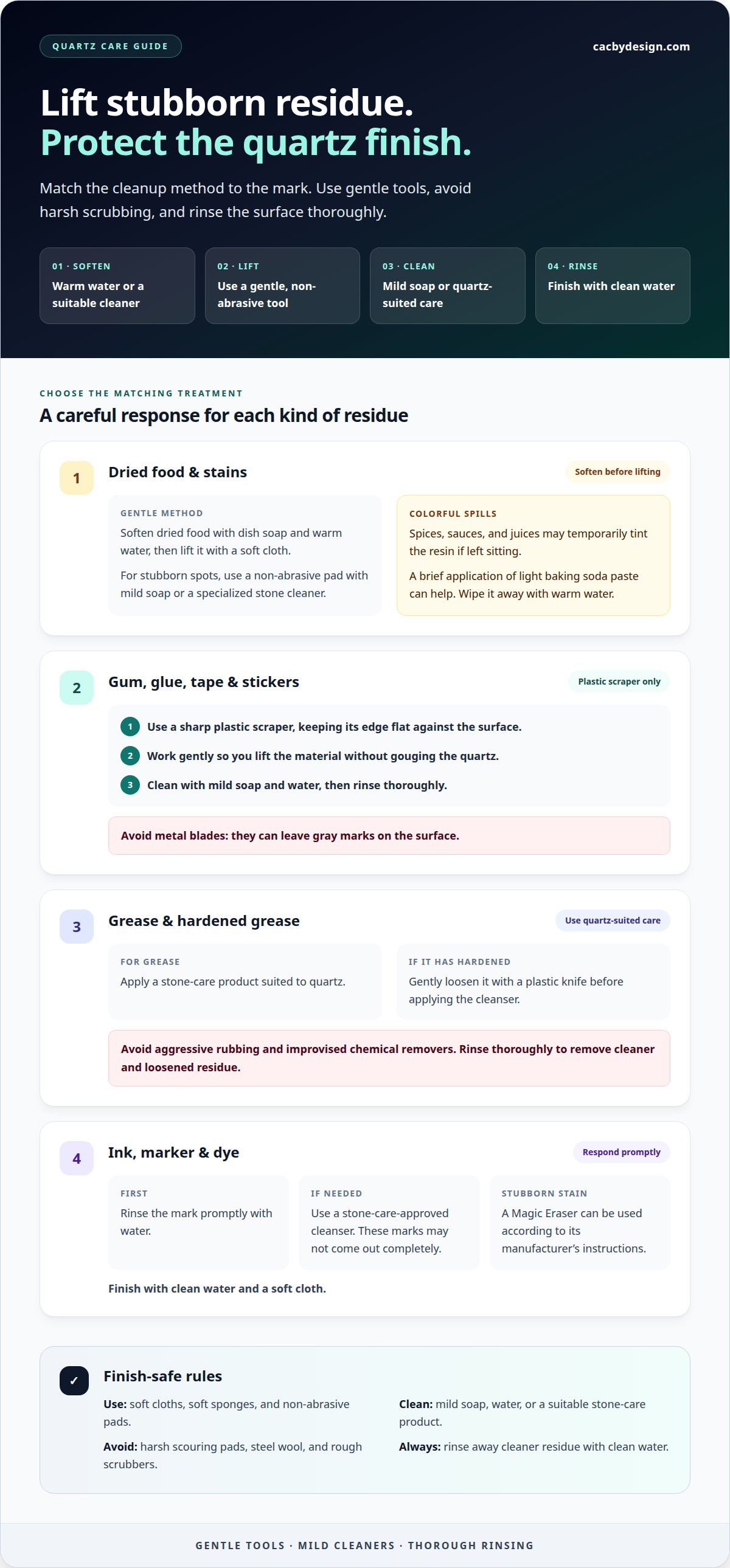
Removing stubborn food stains and adhered materials
For dried food, grease, or sticky residue, soften it first, then lift it gently. Choose a tool and cleaner suited to the mark to avoid damaging quartz countertops.
Remove Dried Food and StainsSoften dried food with dish soap and warm water, then lift it with a soft cloth. For stubborn stains or dried spills, use a non-abrasive pad with mild soap or a specialized stone cleaner. Brightly colored spices, sauces, and juices may temporarily tint the resin if left sitting. A brief application of light baking soda paste can help; wipe it away with warm water.
Remove Sticky Residue and AdhesivesLift gum, glue, tape, stickers, or other strongly adhered material with a sharp plastic scraper. Work gently, keeping the edge flat against the surface to remove residue without gouging the quartz. Avoid metal blades, which can leave gray marks. After scraping, clean the spot with mild soap and water, then rinse thoroughly.
Treat grease without harsh scraping. Apply a stone-care product suited to quartz. If grease has hardened, gently loosen it with a plastic knife before applying the cleanser. Avoid aggressive rubbing or improvised chemical removers, which can damage the finish. Rinse the area thoroughly after cleaning to remove the cleaner and loosened residue.
Handle dyes and remaining marks carefully. Rinse permanent ink, marker, or dye promptly with water, then use a stone-care-approved cleanser if needed. These marks may not come out completely. For a stubborn stain, a Magic Eraser can be used according to its manufacturer’s instructions. Finish with clean water and a soft cloth.
A multipurpose cleaner or detergent can be used on stubborn stains or dried spills. A sharp plastic scraper can lift strongly adhered food, gum, nail polish, paint, or other residue from quartz.
Comparing quartz care with granite and marble
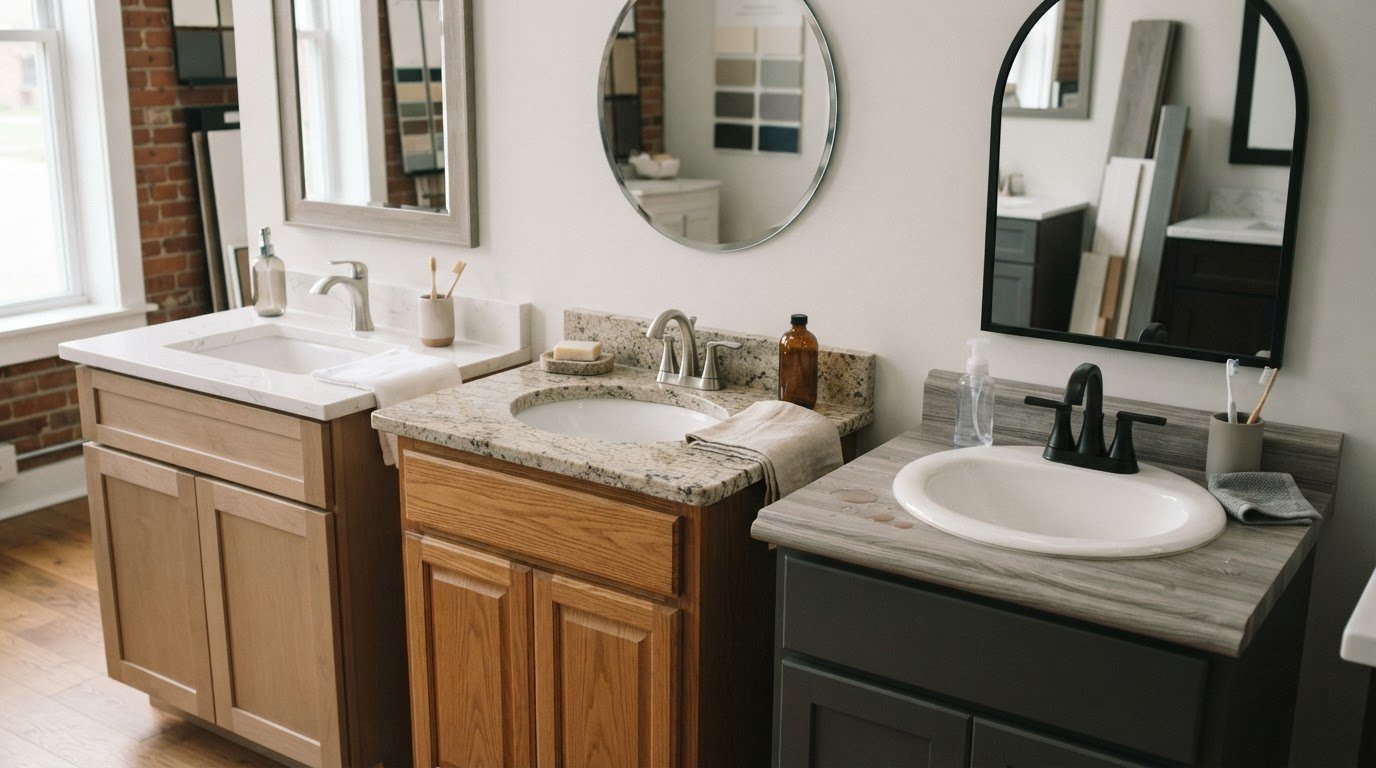
Compare care routines as well as appearance before choosing a countertop. Quartz has clear maintenance advantages, but granite and marble need material-specific care rather than an assumed one-size-fits-all routine.
Choose quartz for a simple routine. Quartz surfaces are nonporous and don’t require sealants. Clean everyday residue with soap and water or a gentle detergent, then rinse and dry. Quartz also doesn’t need polishing to maintain its shine and smoothness. These points make its regular upkeep direct, though they don’t make it damage-proof.
Keep the quartz heat rule in your routine. Use a trivet or heating pad between quartz countertops and hot cookware. Brief heat exposure may be tolerated, but prolonged direct contact can cause damage. This protection remains important even though quartz is durable and resistant to everyday stains.
Don’t assume granite follows quartz care. Granite is a different countertop material, so use care instructions intended for that specific surface. Don’t infer that it needs the same cleaner, sealing routine, or heat precautions based only on its natural appearance. The relevant details are the material and its finish, not a generic natural-stone label.
Treat marble as its own material, too. A quartz routine shouldn’t automatically become a marble routine. Follow marble-specific care directions for the cleaner and finish, and remove spills immediately rather than letting residue sit. Comparing those directions with quartz’s no-sealant, no-polishing routine gives you a practical basis for choosing.
Make the choice around upkeep. If you want a surface that doesn’t need sealing or polishing, quartz has a clear advantage on those tasks. Granite and marble remain distinct countertop options, but their care should be based on material-specific guidance. Explore countertop material options to compare quartz, granite, and marble for your project.
Countertops and Cabinetry By Design: Quartzite Countertops
Countertops and Cabinetry By Design can help you move from care questions to choosing a countertop for your kitchen or bathroom. If you’re weighing quartzite against quartz’s low-maintenance routine, the team can guide material selection, design, fabrication, and professional installation. Marble and granite countertops are also options when comparing natural stone with engineered quartz.
Turn to the team when you’re planning a new surface, replacing an existing countertop, or coordinating a choice with a remodel. The right material depends on the look you want and the care routine that suits your space. Countertops and Cabinetry By Design brings those decisions together with a full-service approach and installation by its in-house craftsmen.
For help choosing a countertop material for your project, contact Countertops and Cabinetry By Design.
Plan Your Next Countertop Project
Your countertop choice shapes both the room’s look and its care routine. Consider the finish you want, how you use the space, and what level of upkeep feels practical for your household. These priorities can help turn a material decision into a design decision.
Countertops and Cabinetry By Design offers quartz, quartzite, and marble countertops. Comparing these options as part of your kitchen or bathroom plans connects material choice with the room’s overall design. A thoughtful approach to cleaning and maintaining quartz surfaces starts with choosing a countertop that suits your style and everyday routine.
Bring your design priorities and material questions into the next conversation. Contact Countertops and Cabinetry By Design to discuss countertop options for your project. The right starting point is a choice that feels considered, fits your space, and gives you confidence moving forward.
Frequently Asked Questions
Can quartz stain?
Yes, quartz can show marks or temporary discoloration, even though its surface resists stains. Brightly colored sauces, spices, and juices may tint the resin if left on the countertop. A mark may be residue on the surface rather than a lasting stain. Clean spills promptly, then assess the spot after rinsing and drying before trying a stronger cleaning method.
Can white quartz discolor?
Yes, white quartz can look dull or slightly tinted if spills sit too long. Soap or grease residue can also affect its appearance, while water left after cleaning may cause visible streaks. Wipe the surface clean, rinse away residue, and dry it carefully. If a mark remains, treat it as a stain rather than repeatedly scrubbing the entire countertop.
How do I keep my quartz looking new over time?
Build a consistent routine and respond quickly to spills, fingerprints, and grease. Honed or matte finishes can show fingerprints and grease more readily, so they may need extra attention during everyday cleaning. Protect the surface from scratches and direct heat, and avoid products that can wear its finish. Quartz doesn’t need polishing to maintain its shine.
How do I remove tough residue without scratching the surface?
Soften residue before lifting it. For dried food, let dish soap and water loosen it, then use a soft cloth. For strongly adhered gum or similar material, gently use a sharp plastic scraper held against the surface. Avoid metal blades and abrasive pads. Rinse after cleaning, then dry the area so any remaining film doesn’t obscure the result.
Want Real Advice on Caring for Your Quartz or Choosing the Right Countertop?
Yes. Countertops and Cabinetry By Design can help you consider countertop choices for a kitchen or bathroom project. Homeowners in Hamilton, Butler, Warren, Montgomery, Green, Clinton, Clermont, and Brown counties can discuss options such as quartz, quartzite, and marble. For advice tailored to your project, contact Countertops and Cabinetry By Design and share what you’re planning.
What happens if I use bleach on quartz?
Bleach can break down the resin in quartz over time and change the surface texture. If bleach contacts the countertop, rinse the area immediately and thoroughly with plenty of clean water. Don’t apply another harsh chemical to counteract it. Once rinsed, clean gently and dry the spot, then watch for changes in texture or appearance.


Comments