
How to Decide How Often to Seal Granite Countertops
A fixed resealing calendar can mislead you. Granite countertops don’t all need resealing on the same schedule; the right timing depends on the stone and how it’s used. To decide how often to seal granite countertops, consider the stone’s porosity, color, daily use, and the sealant’s expected lifespan. Some sealants can protect granite for five to ten years or longer.
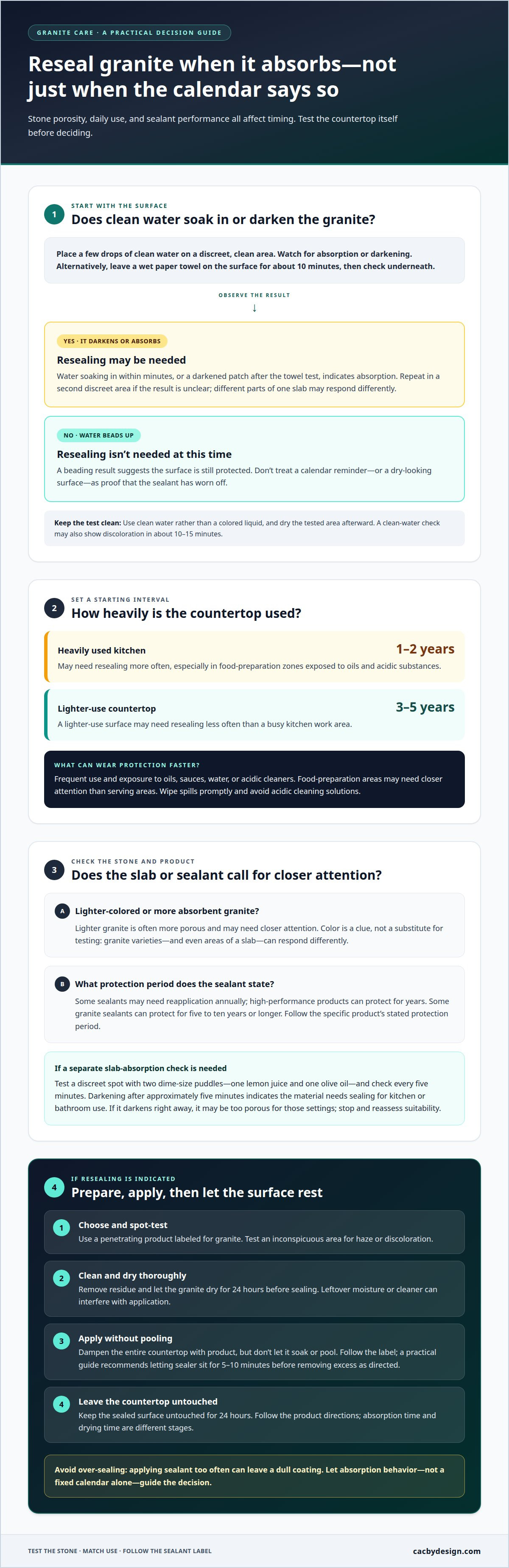
It’s reasonable to want a simple schedule, but the stone itself is a better guide than the calendar. A water-drop test can show whether moisture is soaking in. Lighter-colored granite is often more porous, so it may need closer attention.
This guide explains when granite needs sealing, how stone type and countertop use affect the timing, and which signs suggest it’s time to reseal. You’ll also learn why sealing too often can leave a dull coating, so you can protect the surface without treating every countertop alike.
Table of Contents
Do Granite Countertops Need Sealing?
Granite may need resealing, but timing depends on porosity, daily use, and how well the sealant performs. To decide how often to seal granite countertops, assess the stone instead of relying on a calendar alone.
Assess Resealing FactorsCheck the granite’s color, exposure, and existing protection before setting a routine. Lighter-colored granite is usually more porous, so wipe spills quickly and watch for liquid absorption. Kitchen food-preparation zones face oils and acidic substances, while bathroom surfaces encounter water splashes. Professional sealing costs depend on countertop size, condition, and preparation; the price is set after a quote request.
Match Resealing Frequency to Countertop UseAdjust the schedule to daily activity. A heavily used kitchen may need resealing every 1-2 years, while a countertop with lighter use may need it every 3-5 years. Food-preparation areas may need closer attention than serving areas. Oils, sauces, and acidic cleaners can wear down protection faster, so clean spills promptly and avoid acidic cleaning solutions.
Consider Sealant TypeIdentify the sealant used and follow its stated protection period. Some granite sealants may need reapplication annually, while high-performance sealers can protect for years. There isn’t one best sealer for every slab. Choose a penetrating product labeled for granite and test it in an inconspicuous spot. Applying sealant too often can leave a dull coating.
Test Whether Resealing Is NeededPlace a few drops of clean water on the granite and watch for absorption or darkening. If water soaks in within minutes, the surface may need resealing; if it beads, resealing isn’t needed at that time. A wet paper towel left on the countertop for about 10 minutes offers another check. Test a discreet area first, and don’t treat a calendar reminder as proof the sealant has worn off. This test helps determine how often to seal granite countertops based on actual absorption.
Differences in sealing needs between granite varieties
Granite slabs vary in absorbency. Assess the specific stone, then prepare and seal it according to how it responds to liquids.
Look at the slab’s appearance and absorption behavior before choosing a routine. Lighter-colored granite is often more porous and may need closer attention than less absorbent stone. Color is a useful clue, not a substitute for testing: two slabs can behave differently. For new granite, confirm that it has protective sealant before daily use, then use an absorption test to guide future sealing.
Test a discreet spot before applying sealant across the countertop. Make two dime-size puddles, one with lemon juice and one with olive oil, then check them every five minutes. Darkening after approximately five minutes indicates the material needs sealing for kitchen or bathroom use. If the sample darkens right away, it may be too porous for those settings. Stop and reassess the stone’s suitability.
Clean the countertop thoroughly, remove residue, and let the granite dry for 24 hours before sealing. Moisture or cleaner left on the surface can interfere with application. Once dry, follow the sealant label and test an inconspicuous area for haze or discoloration. Apply enough product to dampen the entire countertop, but don’t let it soak or pool.
Give the sealant time to penetrate, then remove excess according to its instructions. A practical application guide recommends letting sealer sit for 5-10 minutes so it can enter the granite’s pores. Don’t assume every material needs the same amount: follow the product directions and the sample’s response. Leave the sealed countertop untouched for 24 hours to support absorption and effectiveness.
Granite porosity and liquid absorption
Granite’s pores affect how quickly water and oil can enter the stone. Use the surface’s absorption behavior to assess it and understand how the sealant is performing.
Test Water AbsorptionPlace a wet paper towel on a clean, dry section of granite and leave it for about 10 minutes. Lift it and inspect the surface for darkening or discoloration. If water beads up, resealing isn’t needed at that time. If the stone darkens, it has absorbed moisture and may need resealing. Repeat the check in a second discreet area if the first result is unclear.A clean-water test can also show whether discoloration develops in about 10 to 15 minutes. That response indicates the countertop should be resealed. Use clean water rather than a colored liquid, so the test reveals absorption rather than residue. Dry the tested area afterward.
Consider Porosity and Liquid AbsorptionCheck how the stone responds to water and oil. Granite’s pores can absorb both, and more porous stone lets liquids penetrate more readily. A darkened patch signals absorption, not just a surface spill. Wipe away water, oil, and other liquids promptly, especially around food-preparation areas where oils may sit unnoticed.Compare results across the slab instead of assuming every section behaves identically. If one area darkens while another stays unchanged, let the more absorbent area guide maintenance. Don’t treat a single bead of water as proof that the whole countertop is sealed.
Allow sealant time to enter the stone. Granite sealant takes about 20 minutes to absorb on average, while sealers typically dry within a few hours. Follow the product’s directions, since absorption and drying are different stages. Remove excess sealant as directed instead of letting it pool on the surface.
Leave the countertop untouched after applying sealant. The product needs time to settle into the granite’s pores; using the surface too soon can disrupt coverage. Don’t add another coat just because the surface looks dry. Dryness alone doesn’t show whether the granite is still absorbing liquids.
How long granite sealants can protect a countertop
Granite sealants can protect a countertop for five to ten years or longer. Actual performance depends on the sealant, stone porosity, countertop use, and application.
Consider Porosity and Sealant WearConsider the granite’s porosity and how the surface responds to everyday use. More absorbent stone can let liquids penetrate as protection wears, while a less porous slab may retain protection longer. Kitchen oils and bathroom water exposure create different demands. Use signs of absorption, not elapsed time alone, to decide whether the protection is still working.
Avoid Applying Sealant Too FrequentlyTest before applying another coat. Sealing too often can cause product to pool on the surface and leave a dull coating that’s easier to damage than the granite itself. A countertop that still repels water doesn’t need another application just because a calendar reminder says so. Excess product won’t improve protection.
Test the sealant in an inconspicuous area before treating the full countertop. Look for hazy residue or discoloration after application. A small test patch shows how the product interacts with that granite without putting the entire visible surface at risk. Follow the label’s application and removal instructions.
Apply a second coat only if the sealant directions call for one. Don’t assume every granite surface or product requires the same method. Spread the product evenly and remove excess as directed to prevent pooling. If the stone continues absorbing liquids after treatment, reassess the application rather than repeatedly layering sealant.
Base your next resealing decision on the slab’s response and the product’s stated protection period. A porous countertop used for food preparation may need closer observation than a lightly used surface. Record the application date and sealant name, then watch for absorption or discoloration during normal use.
For granite chosen to suit your space and its use, explore granite countertop options.
Countertops and Cabinetry By Design: Granite Countertops
Countertops and Cabinetry By Design helps you choose granite countertops for your space and daily routine. Its full-service approach covers design, material selection, and professional installation, giving you a clear path from choosing a surface to planning a finished kitchen or bathroom.
Turn to the team when comparing granite with marble, quartzite, or quartz, or planning a remodel that includes new countertops. Material selection matters: color and porosity affect how granite absorbs liquids and how closely you’ll need to monitor its sealant. Discussing how you use the room alongside the stone can help balance appearance with practical care.
If you’re ready to explore granite countertops for your project, contact Countertops and Cabinetry By Design.
Choose a Countertop That Fits Your Next Project
Make countertop care part of the material decision, not an afterthought. If you’re weighing how often to seal granite countertops against your household routine, discuss your priorities before choosing a surface. A conversation about use, appearance, and upkeep can help clarify your options.
Countertops and Cabinetry By Design offers granite, marble, quartzite, and quartz countertops. Consider which material suits the room and the look you want, then plan the project around that choice. The right decision is the one that works for your space and how you use it.
Contact Countertops and Cabinetry By Design to discuss your countertop project and take the next step with confidence.
Frequently Asked Questions
How Often Should Granite Be Resealed?
Granite is commonly resealed every 12 to 18 months, but use that interval as a reference rather than an automatic appointment. A busy household kitchen may need closer monitoring than a lightly used countertop. Track when the surface begins absorbing liquids and consider the sealant’s stated lifespan. Those details help you set a practical maintenance schedule for your specific slab.
Can you seal the countertop yourself, or is it better to hire a professional?
You can seal granite yourself when testing shows it absorbs gradually and the product instructions fit the surface. A sample that darkens after five minutes or more is suitable for DIY sealing, according to the guidance in this article. If it darkens within about a minute, seek professional advice before proceeding. Follow the label closely, especially for preparation and application.
How to check if the sealer has been applied to the countertop?
Ask whether the countertop was sealed before installation and when its first resealing is expected. Then assess the surface in several discreet spots instead of relying on appearance alone. Water that beads suggests the surface may still be protected; absorption or darkening calls for closer assessment. Recording the product and application date also helps distinguish existing protection from a new treatment.
Is it necessary to seal granite just after the installation?
New granite should have protective sealant before daily use, but that doesn’t automatically mean you should apply another coat after installation. Confirm the countertop’s sealing status and expected first resealing before adding product. This avoids layering sealant over a surface that’s already protected. If the stone was cut or installed recently, let it dry fully before applying anything.
When Is a Sealer the Better Choice?
Choose a granite sealer when the stone absorbs water or oil and needs protection against liquid penetration. Sealer won’t remedy every type of stone damage. If lemon juice damages the stone, the material may not suit kitchen or bathroom use. Use test results to decide whether sealing addresses the problem, rather than applying product to solve a different issue.
How often should granite countertops be sealed?
There isn’t one interval that suits every countertop. Sealant type, porosity, and everyday exposure all affect timing, so use the stone’s absorption response alongside the product directions. For example, food-preparation areas exposed to oils and acidic substances may need more attention than serving areas. Avoid adding sealant simply because a set date has arrived; unnecessary coats can leave residue.

Comments