
Soapstone Fabrication and Installation in Hamilton County
The finish can change how soapstone looks every day. Soapstone fabricators in Hamilton County can take a countertop from material selection through fabrication and installation, so choose a slab and finish based on how you want the stone to look and work in your kitchen. Soapstone is naturally non-porous and heat-resistant. You can leave it untreated or apply mineral oil to bring out its veining.
It’s reasonable to focus on color and appearance first. But the stone’s softness and the way different varieties respond to oil also shape the decision. This guide explains what to consider when choosing soapstone, how fabrication and installation fit together, and which factors affect project pricing. You’ll also see how design decisions, from the finish to the countertop layout, help create a result that feels cohesive and practical.
Table of Contents
Buying soapstone countertops with design, fabrication, and installation services
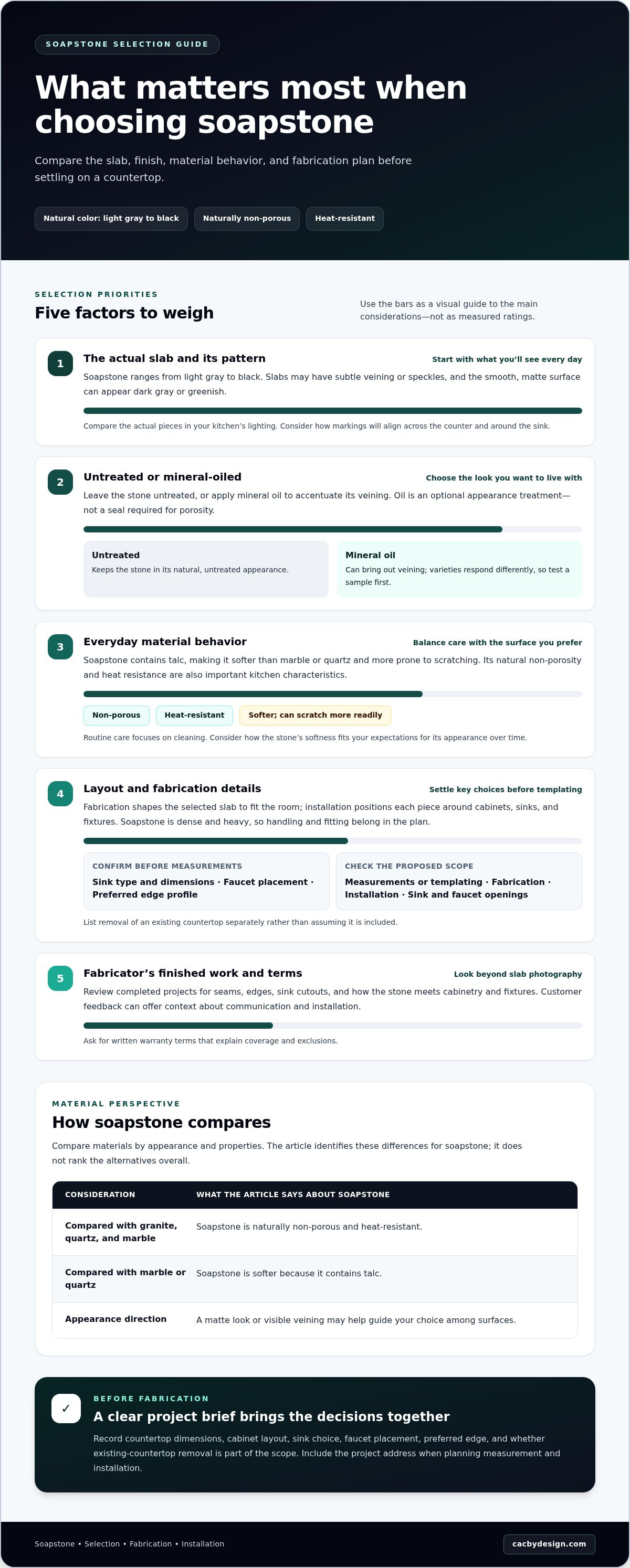
A successful countertop project connects material selection, measurements, fabrication, and installation. For Hamilton County homes, each step shapes the finished kitchen, from sink placement and edge details to the look of soapstone’s natural surface.
Countertop Design and Installation
Soapstone ranges from light gray to black, sometimes with subtle veining or speckles. Compared with granite, quartz, and marble, soapstone is naturally non-porous and heat-resistant, but softer than marble or quartz because it contains talc. Compare slabs in your kitchen’s lighting, then decide whether an untreated finish or mineral oil suits the look you want.
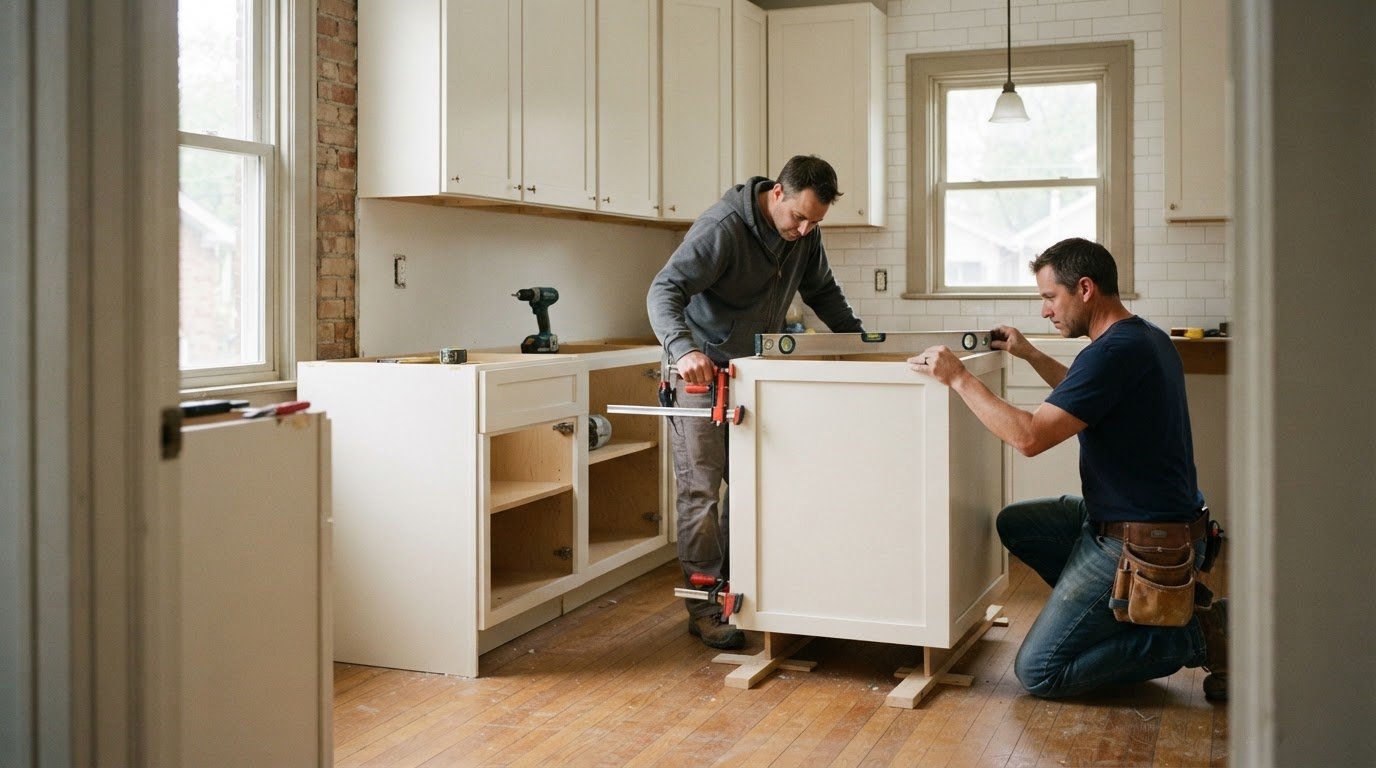
Fabrication shapes the selected slab to fit the room, and installation positions each piece around cabinets, sinks, and fixtures. Since soapstone is also used for surfaces such as sinks and fireplace surrounds, consider how your countertop will coordinate with nearby materials and finishes.
Quote Scope and Project Preparation
A useful quote spells out the project scope, including measurements or templating, fabrication, installation, and removal of an existing countertop if included. It should also identify sink cutouts and faucet openings. Before measurements, choose the sink type, confirm its dimensions, and select an edge profile, since these decisions affect slab layout and finished edges.
Prepare a project brief with countertop dimensions, cabinet layout, sink choice, faucet placement, and preferred edge. List existing countertop removal as a separate scope item rather than assuming it is included. Soapstone is dense and heavy, so the plan should account for handling and fitting each section.
Fabricator Service Areas
For Hamilton County homeowners, Countertops and Cabinetry By Design serves Hamilton County and nearby counties, including Butler, Warren, Montgomery, Green, Clinton, Clermont, and Brown. Share your project address when planning measurements and installation so the work can be considered in the context of your home.
Soapstone is naturally non-porous, so oil is an optional appearance treatment, not a seal required for porosity. Mineral oil can accentuate veining, and varieties respond differently, so test it on a sample first. Routine care focuses on cleaning. Because soapstone is softer than harder surfaces, it can scratch more readily, while its heat resistance supports kitchen use.
Soapstone countertop selection in Hamilton County
Choose soapstone by comparing the actual slab, its finish, and the fabrication plan. For Hamilton County homeowners, these details help match a natural surface to the kitchen and the project’s priorities.
Fabricator Reviews, Portfolios, and Warranties
When evaluating completed work, look for examples that show seams, edges, and sink cutouts. Also review customer feedback for details about communication and installation, and ask for written warranty terms that explain coverage and exclusions.
Assess finished work, not just attractive slab photography. Look for examples showing how the stone meets cabinetry and fixtures. Customer feedback can add context about communication and installation, while clear warranty terms explain coverage and exclusions. Consider these details together when judging the project process.
Available Slabs, Colors, and Finishes
Soapstone ranges from light gray to black, with subtle veining or speckles, and its smooth, matte surface may appear dark gray or greenish. Each slab has its own pattern, so compare available pieces and consider how the markings will align across the counter and around a sink.
Soapstone can be left untreated or treated with mineral oil to accentuate its veining. Since varieties respond differently, test the finish on a sample before deciding. This helps set expectations for the countertop’s appearance, while the stone’s natural color and pattern remain central to the design.
Compare soapstone with marble, quartz, and granite by weighing appearance and material properties. Soapstone is non-porous and heat-resistant, but softer than marble or quartz because it contains talc. If you prefer a matte look or visible veining, use those priorities to guide your material choice.
Build your selection around the slab you prefer and the finish you want to live with. To explore countertop material options alongside soapstone, compare how each surface supports your kitchen’s overall design.
Its resistance to stains and bacteria and easy maintenance can inform care expectations. Testing mineral oil on a sample also helps account for differences among soapstone varieties.
Closest listed facility and business hours
For a Hamilton County project, distinguish the project address from the showroom or fabrication facility you plan to visit. A showroom visit helps with material selection, while fabrication prepares the countertop pieces. Keep the home address in mind when planning measurements and installation.
Separate sample viewing from fabrication planning. A showroom visit can help compare soapstone with granite and other natural stone surfaces; the fabrication location is relevant to cutting and preparing countertop pieces. Before traveling, use the destination’s published business hours to plan your visit. Treat a sample appointment and an installation date as separate steps.
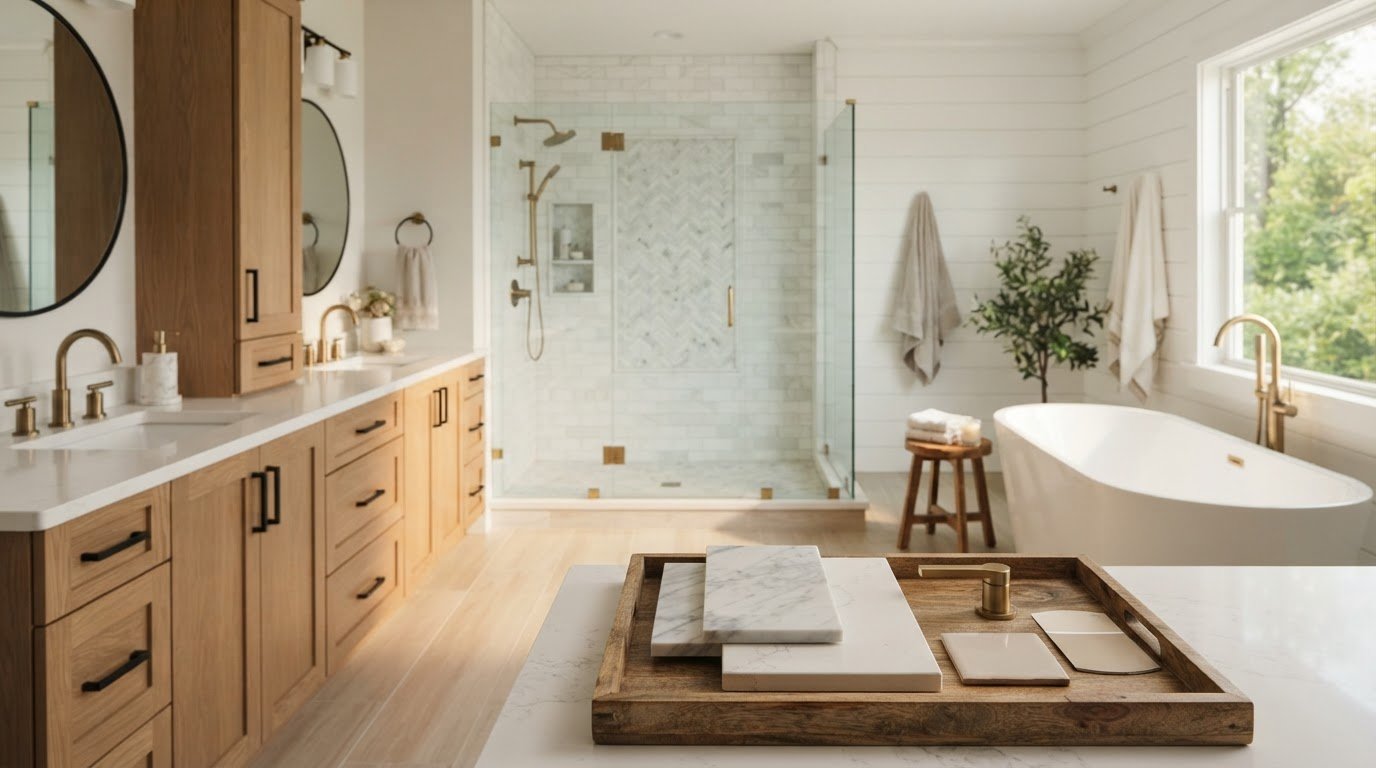
For a bathroom project, bring the vanity dimensions, sink choice, and fixture locations when viewing samples. These details connect the stone selection to the finished layout. For a kitchen, note where countertop sections meet, where the sink sits, and which edge profile suits the cabinets. A concise outline helps focus the conversation.
Plan efficiently by identifying the project address in Hamilton County, locating the relevant showroom or fabrication facility, reviewing its published hours, and mapping your visit. Keep the installation address separate from the visit destination, especially when the facility and home are in different parts of the county.
Business hours determine when you can visit, not the full project schedule. Keep sample selection, templating, fabrication, and installation as distinct milestones. Choosing a soapstone slab during a showroom visit does not establish when the finished countertop will be installed. A clear sequence helps coordinate decisions without confusing a visit with on-site work.
The business offers soapstone countertop sales, custom fabrication, installation, maintenance, and repair. Keeping those services in view can help shape the questions you bring to a visit: whether you are comparing material, discussing a custom piece, coordinating installation, or asking about care or repair. Match the conversation to the project stage.
Which fabricators install soapstone countertops in Hamilton County?
Look for a Hamilton County countertop fabricator that handles soapstone from measurement through installation. That connection keeps the slab layout, sink cutouts, and finished edges aligned with the kitchen plan. Ask for the project sequence in writing, including templating, fabrication, delivery, and placement.
Soapstone is dense and heavy, so installation planning matters. Before cutting the slab, account for countertop dimensions, cabinet layout, seams, and sink location. For example, a sink near a seam can affect how the stone is divided and positioned. Accurate measurements turn design choices into a practical installation plan.
Use the first project conversation to define the scope. Identify whether existing countertop removal is included, which sink and faucet openings are needed, and which edge profile you prefer. Have the kitchen address and access details ready so the fabricator can plan around the actual home.
When comparing soapstone fabricators in Hamilton County, look for completed stone surfaces in project examples, not only slab photos. Review seams, cutouts, and edges, and ask for written warranty terms that explain coverage and exclusions. Customer feedback about communication and installation can also help you assess the project process.
Soapstone is non-porous and heat-resistant, but its talc content makes it softer than marble or quartz. That means everyday use can leave scratches, while heat resistance remains a practical kitchen benefit. A fabricator can explain how the stone’s natural characteristics affect the project’s finish and care expectations.
Ready to map out the work? Start your soapstone countertop project with the measurements, sink details, and finish preferences you’ve gathered.
Consider Hamilton County fabricators whose portfolios show completed stone surfaces and whose customer feedback covers communication and installation. Ask them for written warranty terms, including coverage and exclusions.
Choose a Hamilton County countertop fabricator that connects templating, fabrication, and installation, with a plan for the slab dimensions, seams, and sink location.
Countertops and Cabinetry By Design: Marble Countertops
Countertops and Cabinetry By Design can help homeowners compare countertop materials when soapstone isn’t the right fit for their design priorities. Its countertop options include marble, quartzite, quartz, and granite, giving you alternatives to consider alongside the color, finish, and overall look planned for your kitchen.
When you’re ready to move from material research to a countertop project, share your preferred appearance and kitchen layout with Countertops and Cabinetry By Design. A focused discussion can help identify a surface that suits the design before fabrication and installation planning begin.
Contact Countertops and Cabinetry By Design to discuss your countertop project.
Make Your Next Countertop Decision With Purpose
Choosing among soapstone fabricators in Hamilton County is one part of creating a cohesive kitchen. Before moving forward, define the visual direction you want: a quiet natural surface, a stronger pattern, or contrast with the cabinetry. A clear design priority makes the next conversation more productive and keeps the countertop connected to the room as a whole.
If your preferences lead away from soapstone, Countertops and Cabinetry By Design offers marble, quartzite, and quartz countertops. Compare these materials against your design goals to find a direction that suits the project, rather than choosing a surface in isolation. Consider which look best supports the atmosphere you want at home.
Gather your ideas, decide what matters most, and take the next step at your pace. Contact Countertops and Cabinetry By Design to discuss your countertop plans. A thoughtful material choice can give your kitchen a more intentional starting point.
Frequently Asked Questions
Which Hamilton County soapstone fabricators serve my city or ZIP code?
Countertops and Cabinetry By Design serves Hamilton County, Butler County, Warren County, Montgomery County, Green County, Clinton County, Clermont County, and Brown County. Identify the county for your city or ZIP code, then use the project address when planning measurement and installation. This helps distinguish a showroom visit from work at your home.
How long does soapstone countertop fabrication and installation take locally?
Countertop replacement can be completed in one day in most cases, while the full project sequence includes templating, fabrication, and installation. The schedule depends on when measurements are completed, the slab layout, and details such as sink cutouts or custom edges. For a clear plan, distinguish fabrication from the on-site replacement visit and coordinate kitchen access for each stage.


Comments